The Right Conference Space Can Make or Break Your Legal Meetings


When you step into a meeting with a client, opposing counsel, or a potential business partner, the space you’re in sets the tone before you even say a word.


The right conference space isn’t just about aesthetics—it impacts your efficiency, confidentiality, and even your ability to win cases. Whether you’re handling depositions, mediations, client negotiations, or trial prep, the right setting makes a difference.


The Hidden Costs of the Wrong Meeting Space

Many attorneys don’t consider how their meeting space impacts client perception and productivity.

Coffee shops are noisy and lack privacy, hotel meeting rooms are costly and impersonal, and meeting at a client’s office can shift the dynamic. Even your own office may have space limitations and distractions.

The right space should enhance professionalism, ensure confidentiality, and let you focus on your clients.

 

A group using the right conference space for a meeting


This is why many attorneys are turning to professional conference centers—a cost-effective, fully equipped solution that enhances productivity without the overhead of a long-term lease.


How Professional Conference Centers Improve Efficiency for Lawyers


  1.  Saves You Time & Reduces Administrative Work

Scheduling, setting up technology, greeting clients, and handling documents—these small tasks add up. A professional conference center takes care of it all, allowing you to walk in, get to work, and leave when you’re done—without the hassle.


  1. Enhances Your Professional Image

Your meeting space reflects your practice. When you meet in a high-end legal conference room, you signal credibility and success to your clients, opposing counsel, and potential partners.


  1. Provides the Privacy & Security You Need

Legal work often involves confidential conversations and sensitive documents. A proper conference center offers secure spaces, soundproofing, and legal document handling—ensuring nothing leaks outside your meeting.


  1. Improves Client Experience

Your clients notice every detail, from the professionalism of the front desk to the quality of the coffee. The right meeting space makes them feel comfortable and confident in your abilities.

  1. Keeps You Close to Courthouses & Legal Hubs

If you practice in Chicago, being near Daley Center, Dirksen Federal Courthouse and other key locations means less wasted time commuting—and more time focusing on your case.

 

Paralegals working on a case


When Should Lawyers Use a Professional Conference Center?

A dedicated legal conference space isn’t just for major firm meetings—it’s useful for any situation where privacy, professionalism, and efficiency matter.


  1. Depositions

A quiet, neutral setting ensures depositions are handled professionally, with on-site support for transcripts, exhibits, and video recording.


  1. Mediation & Arbitration

A private, well-equipped meeting space sets the right tone for negotiations, making settlements easier to reach.


  1. Client Consultations & Strategy Sessions

Clients feel more at ease when meetings are held in a professional, distraction-free environment with comfortable seating and legal resources available.


  1. Case Preparation & War Room Sessions

Trial prep often involves reviewing evidence, strategizing with your team, and coordinating logistics. Having a fully equipped space—with printers, whiteboards, and AV technology—keeps you focused.


  1. Networking & Business Development

A prestigious conference center gives you a place to host seminars, workshops, and networking events, positioning yourself as a thought leader in the legal community.
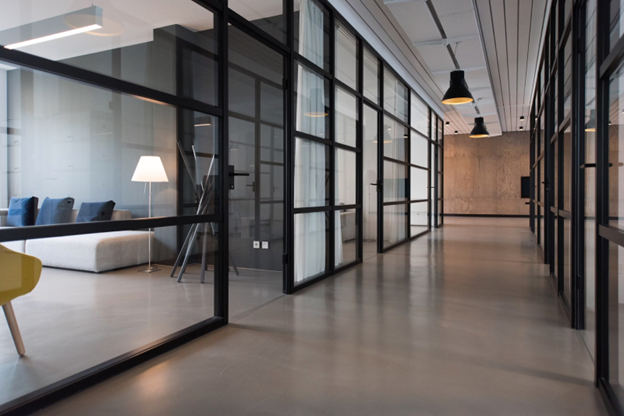
 

Beautiful hallway


What to Look for in a Professional Conference Center

Not all conference spaces are designed with attorneys in mind. Here’s what a high-quality legal conference center should offer:


✔ Location Near Courthouses & Legal Offices – Saves time and enhances accessibility.


✔ Confidentiality & Security – Soundproofing, secure document storage, and private meeting spaces.


✔ Legal Support Services – Paralegals, admin assistants, and document handling available.


✔ Technology & Presentation Tools – Video conferencing, large screens, and whiteboards.


✔ On-Demand Booking – No need for long-term commitments—just book when needed.


✔ Concierge & Reception Support – A professional team to greet clients and manage logistics.


Where Chicago Lawyers Can Find the Best Conference Spaces

For attorneys looking for high-quality conference centers in Chicago, Amata’s legal-focused workspaces offer a solution built for the way you work.


📌 Locations near Daley Center & Dirksen Courthouse – Walk from your meeting to court in minutes.


📌 Private, secure conference rooms – Ensure confidentiality for depositions and client meetings.


📌 On-site legal support staff – Get help with documents, filings, and case prep.


📌 Flexible booking – Rent by the hour, day, or month—pay only for what you need.


📌 Prestigious office setting – Impress clients, opposing counsel, and colleagues.


Need a professional space for your next meeting?
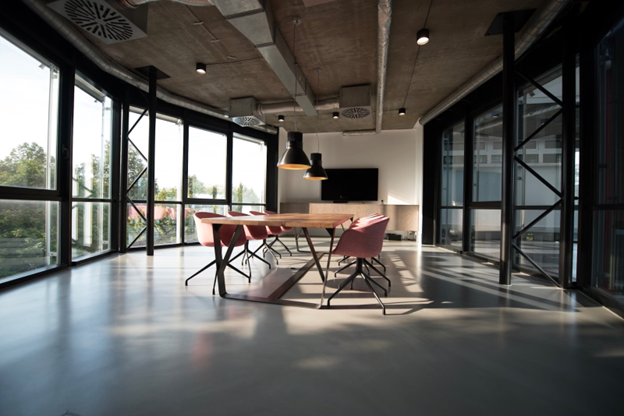


Reserve a conference room today.


The Right Space = A More Productive Law Practice

Lawyers don’t just need an office—they need a strategic, professional environment that enhances productivity, client confidence, and efficiency.

Whether you’re meeting a high-profile client, preparing for trial, or hosting a crucial deposition, the right conference center ensures you’re set up for success—every time.


Will Office Space Become Obsolete?

With remote work on the rise, will office space become obsolete?

According to a study done by Boston Consulting Group, ‘1.5 billion square feet of office space could become obsolete’, with low utilization, high vacancy levels, and financial viability slipping away for many.

Here at Amata we provide office spaces for law firms and professional services companies in Chicago, so this is a trend that could deeply affect us. But the reason why we’re not worried (and actually feel hopeful for the future), is because we have lived this already through the pandemic and found that Office Space will not become obsolete, it just needs to twist to effectively serve the new demands of the market.

Enter The New Era of Office Space

During the pandemic one of our natural worries was, “Will people stop needing an office?”. And contrary to our fears, Amata grew and today we serve more than 800 clients all over Chicago.

There are a few reasons for this:

  • While companies had to go fully remote for some years, many have realized that this is not a sustainable work arrangement for them. Their associates desire human connection, a dedicated space where they can be productive, and the prestige that comes from an office in downtown Chicago.
  • This means that most solo and small law firms today are either working on-site or with hybrid arrangements.
  • Hybrid companies are giving their team members the option to choose between remote work or on-site work. 


The 2022 Practice Forward Report by The American Bar Association found that 44% of lawyers practicing 10 years or less were more likely to leave their current job for one that offers a greater ability to work remotely. At the other end of the age spectrum, only 13% of those practicing over 40 years would leave their place of employment for the greater ability to work remotely.

This means that there is a clear generational divide, where more established lawyers desire to work at the office while younger generations work more flexible options. This is why hybrid companies choose to retain talent by giving their employees options.

But how can they keep an office space without spending excessively or being locked by a 5-year lease?

At Amata, we help them with our flexible plans which allow them to add or drop office space during the term of the contract, without penalty, so they can scale up and down as their company grows. This means that they can add new team members or create a leaner team without being worried about unutilized office space or relocating.

We also provide Hybrid companies solutions that match their desired flexibility, such as conference rooms for the day, support staff on-demand (only pay what you need), mail handling, and networking events.

  • Even fully remote companies can benefit from some physicality. For example, listing your home as your official business address can hurt credibility in the eyes of clients, and also not be the best idea for safety reasons.

    That is why at Amata we provide remote companies a virtual business address, so that clients associate your organization with Class A, prominent office buildings in the Chicago area. A virtual business address also entitles you to receive correspondence at the location and enjoy mail processing and forwarding from the on-site staff.

What we have found is that office space will not become obsolete, it just needs to be reimagined. Lawyers and professionals want a healthier work/life balance, and they want office spaces that provide it.

That is why our unique model at Amata offers:

  • Flexibility – Programs that allow you to cancel offices during a contract term.
  • Hourly paralegals that work as if they are on your staff.
  • Administrative assistants that work with you virtually and in person, depending on your needs and circumstances.
  • Quarterly office socials to make new acquaintances and build relationships with others working in the center.
  • Monthly attorney socials with over 800 attorneys involved to expand your network and business opportunities.
  • Paralegal assistants that go to city hall, the Recorders Office and deliver courtesy copies to judges for you.
  • Live receptionists that can screen your calls, handle new client in-take and greet your guests.
  • Easy access to decision-makers and owners of Amata.
  • Notary/witness service program at all locations; plus a remote notary/witness service program that includes video recording.
  • Conference room usage is not rounded up to the nearest hour. You only pay for time you use in 15-minute increments

All so you can:

        • Maintain profitability: When your revenue goes down, as a business owner you need to reduce expenses to maintain profit. Amata provides flexibility in order to achieve this in your office space costs (which are a large chunk of expenses).
        • Access office space on your own terms: Amata provides 12-month lease terms with a 30-day notice to adjust office space. This provides a key ability to reduce costs and maintain profitability when needed.
        • Be fully supported as you grow: Whether you’re doing a virtual or physical office, Amata provides on-demand (hourly) support services in the form of admin assistants, paralegals, receptionists, and business phone / phone app services that you get tasks off your to-do lists and back to growing your business.

So if you are a small law firm considering not renewing your office lease, try Amata. Our model is designed with you in mind: To give you modern offices that boost your team’s productivity and your firm’s prestige, while protecting your bottom line and giving you a support team that grows as your firm grows.

Contact us today to see how our virtual and on-site, flexible office plans can help you scale.

Discover our offices for lawyers in Chicago.

How Hybrid Law Firms Are Changing The Industry

Five company directors in meeting with CEO in conference room.

More than three years after the COVID-19 pandemic started, the way lawyers work is changing forever.

While many law firms continue to work remotely, many of them saw the need for physical interaction with clients and teammates and decided to go back to the office. But the generational divide is clear:

The 2022 Practice Forward Report by The American Bar Association found that 44% of lawyers practicing 10 years or less were more likely to leave their current job for one that offers a greater ability to work remotely. At the other end of the age spectrum, only 13% of those practicing over 40 years would leave their place of employment for the greater ability to work remotely.

What this means is that there is not one generalized consensus about how remote work affects lawyers’ productivity and satisfaction. While some studies find that working from home increases productivity, other studies find that having no boundaries between work and life actually reduces productivity. While some studies find that workers feel more motivated working from home, other studies find that people’s mental health suffers when they stop those daily and spontaneous interactions with teammates and clients.

So what’s the truth? And what can law firms do to maximize their productivity and team retention, while saving costs on office space?

Enter the Hybrid Work Model

Instead of making people choose between remote work or on-site work, The 2022 Practice Forward Survey found that lawyers want the flexibility to decide for themselves when they work in the office and when they work at home. There is a strong desire to create flexible schedules and hybrid work arrangements, that will allow each person to control their day and tailor it to the way they know they can maximize productivity.

In other words, lawyers value optionality more than anything.

The Hybrid Work Model combines both in-person and remote work, offering lawyers and staff greater flexibility while maintaining the core functions of a traditional law firm.

This model allows firms to attract and retain top talent by offering a more attractive work-life balance, reduces overhead costs associated with maintaining large office spaces, and fosters agility and resilience in our age of disruptions.

However, there are 7 important factors to consider in order to implement the hybrid model effectively:

  1. Clear Policies and Guidelines: Clear policies and guidelines should outline the rules that will govern the hybrid work arrangement. Include expectations regarding work hours, communication, data security, client interactions, and performance metrics. Ensure that all employees understand and adhere to these guidelines.
  2. Technology Infrastructure: Invest in robust technology infrastructure to support remote work. This includes secure remote access to case management systems, cloud-based document storage, video conferencing tools, and cybersecurity measures. Ensure that employees have the necessary hardware and software to work effectively from various locations.
  3. Communication Tools: New communication tools and practices are required to maintain seamless collaboration among team members. Utilize video conferencing, instant messaging, project management software, and virtual meeting platforms to facilitate communication and document sharing.
  4. Performance Metrics: Develop key performance indicators (KPIs) and metrics to assess employee performance and productivity in a hybrid work environment. These metrics can include billable hours, case progress, client satisfaction, and project completion rates. Review and adjust these metrics regularly as needed.
  5. Training and Support: Offer training and support for employees so all of them can navigate the hybrid work model successfully. Provide guidance on using remote work tools, maintaining data security, and managing time effectively. Encourage ongoing skill development to adapt to evolving work practices.
  6. Client Interaction Strategy: Develop a strategy for maintaining strong client relationships in a hybrid work environment. Consider offering both in-person and virtual client meetings, ensuring that clients can access legal services conveniently. Communicate the firm’s commitment to maintaining high-quality client service.
  7. Employee Well-being: Prioritize employee well-being and mental health. Recognize the challenges that come with remote work and provide resources to support physical and emotional health. Encourage regular breaks, flexibility in work schedules, and initiatives that promote work-life balance.

The hybrid work model can represent a significant shift in how lawyers practice, so most team members will require support. By setting clear expectations and controls, but also trusting people will continue doing their jobs, law firms can successfully transition to this new model while maintaining high standards of service.

How Hybrid Law Firms Can Access Office Spaces — On Their Own Terms

At Amata, we saw long before the pandemic how the legal industry was shifting. Technological disruptions and changing attitudes towards work meant that people craved more freedom and meaning, while still prioritizing law firm profitability and growth.

This is why our office-as-a-service model is the perfect complement to hybrid law firms. It allows lawyers to work remotely and protect their bottom line, while still enjoying the benefits of a traditional office space.

Our shared office spaces allow lawyers and professional service companies to have a prestigious business address in Chicago, access a private office or a conference room for the day, and get support from paralegals and virtual receptionists only when they need it. This flexible office space plus support staff on-demand model is why more than 800 law firms choose us.

And there’s more. With Amata, you can access:

  • Scalable office plans where you can add or drop office spaces during the term of the contract, without penalty, so that you can stay agile without the hassle of relocating.
  • Flexible legal support staff (both in-person and virtual) that act as an extension of your work, without the costs and risks of hiring full-time employees.
  • On-demand paralegals, administrative assistants, and virtual receptionists. All pre-vetted for you.
  • A business address in a prestigious area in Chicago, so you can impress clients and keep their trust.
  • Mail handling, scanning, and forwarding.
  • Conference rooms & private offices for the day.
  • Professional live receptionists to meet and greet your clients.
  • Networking events, so you can keep building relationships and growing your business even if you are fully remote.
  • And much, much more!

If you’d like to adopt a hybrid work model for your law firm, but do not want to lose the support services and productive environment a traditional office provides, Amata is for you. Our flexible plans and scalable solutions ensure you protect your profitability, while having access to modern offices that meet your exact needs.

Contact us today to schedule a tour of our locations. Discover how can we support your growth, whether you choose to work remotely, on-site, or opt for a hybrid model.

Discover our virtual offices in Chicago.

How Remote Law Firms Can Expand Their Reach In Chicago, Without Needing a High-Priced Office

Having a remote law firm has many benefits, but it also has its costs. On the bright side, lawyers can reduce commute times, achieve a healthier work-life balance, and sometimes even increase their productivity, while lowering their real estate costs and workplace liabilities.

But almost with the same degree of possibility, lawyers can end up working all day, feel isolated and burnt out, and see a massive drop in productivity. In fact, the 2022 Practice Forward Report by The American Bar Association found that only 13% of lawyers practicing 10 years or more would leave their place of employment for the greater ability to work remotely.

The reality is that established lawyers thrive on relationships and human connection, and remote work can make this significantly harder. That is why a new option is rising today, which is hybrid work.

The Benefits of Hybrid Work

There are 9 things that law firms risk losing when going fully remote, and that can be mitigated by choosing a hybrid work environment:

  1. Limited Access to Resources: Lawyers often rely on law libraries, legal databases, and physical documents. Remote work may limit access to these essential resources, making legal research more challenging.
  2. Client Confidentiality: Remote work environments may not always provide the same level of security as a traditional office, increasing the risk of data breaches or unauthorized access to sensitive information.
  3. Collaboration Challenges: Remote work can hinder spontaneous interactions and face-to-face collaboration, potentially affecting teamwork and communication.
  4. Client Meetings: Building rapport with clients can be more challenging through remote interactions, as it lacks the personal touch and trust-building opportunities that come with in-person meetings.
  5. Technical Issues: Remote work relies heavily on technology. Technical glitches, internet outages, or software problems can disrupt work, delay deadlines, and lead to frustrations.
  6. Isolation and Burnout: Lawyers working remotely may experience feelings of isolation due to the absence of regular social interactions with colleagues. This isolation can contribute to burnout and negatively impact mental health.
  7. Ergonomic Challenges: Lawyers often spend long hours reviewing documents or writing briefs, which can lead to chronic pains and postural issues when working from home without a proper office setup.
  8. Lack of Supervision: Junior lawyers or interns may miss out on valuable mentorship and supervision when working remotely, which can affect their professional development.
  9. Client Perception: Many top-tier clients prefer their lawyers to work from a traditional office setting, viewing it as a sign of professionalism and commitment.

So could there be a way to work how you want, from where you want, without missing out on the benefits of having a well-equipped, professional office?

How Flexible Office Arrangements Work

Amata pioneered an innovative ‘office-as-a-service’ model in Chicago, which allows lawyers to work remotely while enjoying the benefits of a traditional office space. Law firms can take care of business from virtually anywhere, and still access:

  • A Business Address in a Prestigious Chicago Area

Your clients need to trust who they’re working with. Amata provides the hospitality and the professional and personal touch your clients deserve. Amata provides a virtual business address, so clients associate your organization with Class A, prominent office buildings in the Chicago area.

  • Mail Handling, Scanning and Forwarding

A virtual business address also entitles you to receive correspondence at the location and enjoy mail processing and forwarding from the on-site staff.

  • Conference Rooms & Private Offices for the Day

With Amata, you can keep protecting your firm’s bottom line by having a physical office available as needed. Our flexible options allow you to access luxurious conference rooms and fully-staffed offices on demand, and your clients will never know that you aren’t renting the entire space because we customize everything for you.

Our shared office spaces also allow you to pay for only the space that you need. No need to pay for a lavish 200-meter library that you won’t use. And as your firm grows, our scalable plans provide the perfect solution for expansion. These plans allow you to add or drop office spaces during the term of the contract, without penalty, so that you can stay agile without the hassle of relocating.

  • Flexible Legal Support Staff, Including Paralegals and Administrative Assistants

With Amata, you can access corporate-level law firms without the costs of hiring full-time employees. We provide a wide variety of support services to attorneys including paralegals, legal assistants, administrative assistants, and receptionists (both in-person or virtual).

This allows you to focus on billable hours and growing your firm with a healthier work/life balance, while all the important but tedious tasks are taken care of professionally for you.

Our paralegals research cases on your behalf and draft documents while a virtual legal assistant manages your calendar, returns client phone calls, and plans events. They are all vetted and managed by Amata, ensuring you only pay for the services you require without the increased costs of full-time employees.

  • Live Receptionists to Meet and Greet Your Clients

Not all firms are created equal, and your office space should reflect that. Our Live receptionists will project an image of reliability and stability to your clients, meeting them as they arrive at your office and handling any urgent task on your behalf.

Live receptionists protect your time and handle important office-related tasks like phone answering, call forwarding, message taking, appointment scheduling, calendar management, CRM updating, and much, much more.

  • Networking Events

Having served more than 800 law firms for over 21 years, we have noticed that successful lawyers are in the business of building relationships. Amata’s unique model allows you to continue working remotely, but to attend networking events with like-minded professionals you can connect with to expand your partnerships, referrals, and connections.

A Better Way to Practice Law

The concept of a traditional, fixed brick-and-mortar office is evolving. Law firms are increasingly opting for hybrid office spaces that provide flexible solutions to meet their specific needs.

With Amata, remote law firms can continue working how they want and from where they want, while having professional offices and support services on-demand. This provides the perfect arrangement to expand your reach in Chicago while protecting your profitability and the work/life balance you’ve worked so hard to achieve. Contact us today and learn how our virtual office solutions allow you to increase profits while practicing law on your terms.

Discover our offices for lawyers in Chicago.

Selecting The Best Virtual Office

How do you select the best virtual office program? There has been a big increase in the demand for these programs recently. With the increased demand  many new players, looking to make a quick buck, have entered the playing field. Some are marketing companies, with no direct responsibility for the services you are receiving.

Others have very limited resources and experience in providing clients the services they need. When selecting a virtual office provider be sure to look into their history and to make sure they will be accountable for providing the services you are paying for. The most successful companies survive on their reputation, so providing the best service possible is how they win new clients.

Amata Office Suites has been providing Virtual office services for more than 21 years. Understanding how to take care of our clients is what we do better than anyone in the industry.

WHO USES VIRTUAL OFFICE PROGRAMS

Large firms are using virtual office programs to open in new cities. Since the pandemic began many small firms have converted to virtual office programs to reduce costs. Midsize firms that have given up traditional office leases now maintain a combination of physical office space in a coworking office, with a virtual presence for those employees that do not come into the office on a regular basis. Almost every business, regardless of size or the nature of the business, can benefit from maintaining some type of virtual office program.

SECURITY PROTECTIONS AND PROFESSIONAL IMAGE

When selecting the best virtual office, it is important they provide adequate security protections. Providing a home address and personal phone number can expose an owner to unnecessary risk. By using a virtual address for the company, an owner is better able to insulate their private lives from that of their business. In much the same way, separating an owner’s personal cell phone number from the business phone number helps to keep personal information separate from that of the business.

For most businesses a professional image influences their pricing models. Businesses with positive images in the minds of their consumers have more pricing power than those with a negative or neutral image. Companies with a prestigious address in a desirable location, immediately create a positive impression with clients.

COST SAVINGS

Renting or buying a physical office space can be a significant expense for businesses, especially startups or small businesses. Virtual offices offer a cost-effective alternative as they allow businesses to have a prestigious business address at a fraction of what a traditional office space would cost.

Virtual offices enable businesses to operate remotely and have a distributed workforce. Employees can work from anywhere, and the business can have a presence in multiple locations, creating a global presence. Firms can have local addresses and phone numbers in various countries or cities, helping them establish credibility and connect with local customers. This flexibility allows for increased productivity, profitability, and work-life balance for employees.

SUPPORT SERVICES

Virtual office services can include mail handling, a prestigious address, and many additional services that are provided a’ la carte. Many providers specialize by industry. For example, Amata Office Suites provides call answering with client in-take for law firms and professional service companies. Using a provider that provides a phone and phone app eliminates the expense of sourcing a separate business phone provider.

Administrative support can include the use of professional administrative assistants, paralegals and virtual assistants. Taking advantage of these resources will reduce a company’s fixed expenses, reducing risk.

Access to conferencing facilities is another benefit to using a virtual office service. The most prestigious virtual office providers provide access to meeting rooms, with the latest conferencing technologies to host in-person and virtual meetings. This provides businesses access to prestigious meeting rooms when needed, without the need for a dedicated office space.

Speak with an Amata team member to find out how your firm can benefit with a virtual office program. Contact us today.

Discover our virtual offices in Chicago.

Maximizing the Value of a Full-Time Employee

Employee utilization rates may be the most ignored or misunderstood stat in small businesses and law firms. Instead of using quantifiable data, many small businesses rely on emotions or intuition to determine when it is time to hire a new employee.

What metrics is your company using to ensure an employees’ time is effectively utilized. Is there accurate data available to help determine when to make a new hire?

It is hard to imagine a law firm that generates revenue through billable hours hiring an additional lawyer if their current lawyers are only billing 10 hours each week.

EMPLOYEE UTILIZATION USING BILLABLE HOURS

We define employee utilization as the hours an employee is engaged in productive work divided by the total hours the employee is paid.

Generally, employees are paid for 2,080 hours annually (including vacation and sick time, excluding overtime). If you expect your employees to generate 1,352 billable hours each year, their utilization rate will be 65%.

Once an employee consistently reaches the utilization rate goal, it is time to hire an additional employee to continue growing your business. If the employee continuously fails to reach the utilization rate goal, it may be time to reevaluate if you have the best employee for the job.

ALTERNATIVE WAYS TO MEASURE EMPLOYEE UTILIZATION

For employees that do not generate revenue through billable hours, such as my companies accounting team members, require them to maintain a work log each day detailing what they worked on and how long it took. A simple spreadsheet is easy to create for each employee to log into throughout the day. This is a valuable tool for employees that work remotely and those that work in the office.

Understanding how much time employees spend on productive work versus time spent surfing the internet, emailing friends, and shopping will help companies increase productivity. Just knowing accountability measures are in place will quickly increase productivity among team members. A Google search on office worker productivity statistics may surprise you. The average office worker is productive 31% of their workday. In an 8 hour day, employees are not doing productive work for 5.5 hours, yet companies are paying for those hours.

BEST PRACTICES

To maximize employee utilization, here are some best practices to consider:

  1. Effective Workforce Planning
    Analyze your business needs, forecast workloads, and plan your workforce accordingly. This involves understanding the demands of different projects, departments, or seasons and aligning your staff resources accordingly.
  2. Clear Communication and Goal Setting
    Ensure that employees have a clear understanding of their roles, responsibilities, and performance expectations. Set specific, measurable, attainable, relevant, and time-bound (SMART) goals with your employees.  This enables them to prioritize their tasks and utilize time effectively.
  3. Efficient Task Assignment
    Match employees’ skills, expertise, and interests with the tasks they handle. Assign tasks based on strengths and provide opportunities for growth and development.
  4. Optimize Work Processes
    Streamline workflows and eliminate unnecessary steps or bottlenecks that can hinder productivity. Encourage employees to provide input on process improvements and implement their suggestions when possible. This will lead to increased efficiency and reduce time wasting activities.
  5. Regular Performance Monitoring
    Implement a system to track and monitor employee performance, enabling management to identify areas where employees may be underutilized or overburdened. Provide constructive feedback and offer support to help them overcome challenges and improve performance.
  6. Training and Skill Development
    Invest in training programs and provide opportunities for employees to enhance their skills. This helps them become more versatile and capable of handling a broader range of tasks, improving their overall utilization.
  7. Flexibility and Cross-Functional Collaboration
    Promote a culture of flexibility and cross-functional collaboration. Encourage employees to share their skills, knowledge, and experiences with one another. Foster a dynamic and resourceful workforce that can adapt to changing needs and fill gaps in different areas.
  8. Effective Time Management
    Work with employees on how to set priorities, avoid multitasking, and minimize distractions. Encourage breaks to maintain a healthy work-life balance and avoid employee burnout.
  9. Technology and Automation
    Deploy tools to streamline repetitive tasks, minimize manual effort, and free up employees’ time. Implementing the right tools can significantly increase overall productivity and employee utilization.
  10. Recognition and Rewards
    Recognize and reward employees for their achievements and efforts. A positive and motivating work environment can boost employee morale, engagement, and overall productivity.

Remember, maximizing employee utilization is not synonymous with overworking employees. It is crucial employees are able to maintain a healthy work-life balance. An alternative to overworking employees or hiring new employees before revenues justify them is Amata’s on-demand virtual assistants, executive assistants and paralegals. Amata can assist with overflow work, back-up when a full-time staff member is out or on a temporary basis while the company is searching for a new full-time employee.

Would you like to speak with Amata team members to find someone that is a fit for you? Contact us today.

Discover our legal support staff for lawyers in Chicago.