Meet the Candidate for Judge

Amata is thrilled to join Attorneys Deanna Blair, Alia Caravelli, & Jennifer P. Irmen in hosting a Meet the Candidate night in honor of our attorney member Ava George Stewart in her upcoming race for Cook County Circuit Court Judge. A special thank you to committee members Nia Heard-Garris, Kim Nevels, Dina Ninfo, Gina Smith & Rhonda Smith for helping put this together.

To show our support and appreciation for her commitment to serving our county, please make plans to join us!

Meet the Candidate

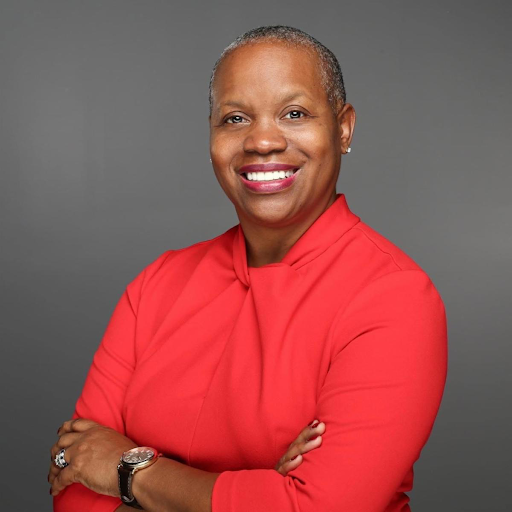
Justice isn’t just a word to Ava George Stewart—it’s her life’s work. A fierce advocate, educator, and trailblazer, Ava has spent her career fighting for fairness and broadening access to justice throughout Illinois.

Now, she’s running to bring that same unwavering commitment to the bench as a Cook County judge.

Ava isn’t just talking about justice; she’s been delivering it for decades.

As both a private practice attorney and prosecutor, she’s seen the system from all sides. As a law professor at UIC, she’s shaping the next generation of advocates. And long before she earned her law degree, she was on the frontlines, leading nonprofits that served homeless women, children, and families in the city and suburbs.

Big news! Ava George Stewart was officially slated by the Cook County Democratic Party as their endorsed candidate for Cook County Circuit Court Judge.

This is a major milestone and wouldn’t have been possible without early support from the legal community. Let’s keep the momentum going!

To learn more about Ava and support her campaign, visit Ava George Stewart for Judge.


Join Us
When:
Wednesday, September 10, 2025, 5:30pm-7:30pm
Where:
77 W. Wacker Drive, 45th Floor, Chicago, IL 60601
Register Here

Beverages and light appetizers will be served.


Join us to celebrate this victory and gear up for the work ahead!

With signature gathering already started, the primary election on March 17, 2026, and the general election next November, we’re just getting started—but together, we’re making history.

Before you come: Check your voter registration at the State Board of Elections to ensure you’re ready to vote!
Support the Campaign: Checks payable to “Friends of Ava George Stewart” can be sent to:
7930 S. Talman Avenue
Chicago, IL 60652

Bring a friend (or two!) who’s ready to mobilize the Cook County vote and support a fair, qualified, and visionary leader. Every voice matters—let’s make sure yours is heard!

Law Firm Valuation Process and Considerations

By Katherine A. Puffer, CPA/ABV, CPCU, MBA

Even if you’re not in the market to sell your law firm, there are several reasons to value your firm such as a possible firm merger, securing loan financing, the addition of new partners, and other business and personal matters such as your succession/exit strategy. It is not only important to know the value of your firm, but also the process analysts take to come to an estimated value. Several valuation approaches are used, and depending on your firm’s circumstances, valuation analysts may use a combination of the income, asset, and market approaches to estimate the value of the firm. 

The Valuation Process: 

To begin, the asset approach presumes that the value of the firm is best determined by the sum of the value of all the firm’s tangible assets subtracted by the liabilities, leaving the net value of its tangible assets (“net tangible assets”). Many firms maintain financial records using cash-based accounting, thus for valuation purposes, their cash-based financials are adjusted to accrual-based financials. For example, accounts receivable, work-in-progress and accounts payable are added to the cash basis balance sheet to arrive at an accrual basis balance sheet. The next step in an asset-based valuation is to adjust the accounting asset values to their market value. For example, fixed assets such as computer equipment are adjusted to their estimated market value (likely close to zero). Asset-based valuations generally do not contain “goodwill” which is the value of a firm over and above the value of its net tangible assets. As a result, the asset approach is generally used to estimate value of real estate entities, holding companies and unprofitable firms. For profitable firms, it provides a minimum value for analysts to consider. 

The income approach values a firm based on cash that can be distributed to partners (“free cash flow”, “cash flow”). Free cash flow is not net income and for growing companies it is generally less than net income. Free cash flow takes into consideration the amount of income that must be held in the firm to fund accounts receivable, work-in-progress, purchases of equipment and other capital needs. For S corporations and LLC’s, distributions to owners to pay taxes are also deducted from net income to arrive at free cash flow. There are a number of methodologies that the valuation analyst can use under the income approach. The methodology chosen depends on whether future free cash flow is expected to grow steadily, vary from year to year or can be estimated based on prior year’s results. After future free cash flow is estimated or forecasted, it is discounted back to the valuation date based on the valuation analyst’s assessment of the risk of achieving future cash flows. For example, a lack of a firm succession plan adds to the risk of achieving future cash flows, increases the discount rate and results in decreased estimated value. Conversely, the existence of a repeating income stream generally reduces risk and the discount rate, resulting in increased estimated value. The final step in the income approach is to subtract firm debt. The income approach arguably provides the most theoretically accurate estimated value for a firm as it is based on the actual firm characteristics and results. 2 

However, the accuracy of this approach is dependent on estimates of future free cash flow and the discount rate. 

Finally, the market approach involves researching the sales of other law firms and utilizing information on the sale of firms with operating and financial characteristics similar to the subject firm to arrive at an estimated value. At a minimum, seven to ten comparable sales are needed to utilize this approach. Information provided on the sale of law practices and the nature of the practices involved is sometimes too incomplete to provide a basis for calculating a value indication. 

Other Considerations: 

Many law practices have buy-sell agreements in place to avoid fighting over value in the event that a buy-out must occur. Many of these agreements contain formulas that have nothing to do with the economic reality of the situation. This frequently causes fights among the owners. In certain jurisdictions, these types of agreements will not be considered indicative of value for a marital dissolution case. 

In a law practice, there tends to be much more dependence on the professional than in other types of businesses. During the valuation process, the attributes of the professional(s) must be considered. Unusual skills, long work hours, a large referral base, and other similar factors will certainly affect the valuation, whether it ends up as a part of reasonable compensation or built into the discount or capitalization rate. 

Probably one of the most difficult assets to value on the balance sheet of a law practice is work in progress. Unless the firm keeps really good records, this can be pretty tricky. This is particularly true for a contingent fee law firm.1 

When a professional practice is being valued for transaction or litigation purposes, it may be important to identify professional and practice goodwill separately and to discuss the likelihood that a portion of the professional goodwill can be transferred in a transaction. 

Consistently high earnings do not necessarily indicate a high practice value for a number of reasons. If earnings are highly volatile, as they can be for a law firm with large contingent-fee cases, value tends to be lower based on the risk of achieving future estimated cash flows. A professional with an outstanding reputation may attract many referrals, but the resulting high earnings in the practice reflect professional goodwill, not practice goodwill. A professional may work much longer than normal hours, but the resulting high earnings may not increase the value of the practice.2 

While, rules of thumb (formulaic: expressed in multiples of revenue or earnings) may provide insight on the value of a professional practice, it is usually only appropriate to use them for reasonableness tests of other valuation approaches. 


For more information contact:

Katherine A. Puffer, CPA/ABV, CPCU, MBA
312-235-2866 (O)
847-477-1954 (M) [email protected]


1 Understanding Business Valuation, Fourth Edition, Gary R. Trugman, Copyright 2012
2 Financial Valuation, Second Edition, James R. Hitcher, Copyright 2006


Sources:

https://www.mondaq.com/unitedstates/strategic-planning/890134/what39s-your-firm-worth- understanding-law-firm-valuations https://www.olmsteadassoc.com/resource-center/law-firm-succession-exit-strategies-valuing-the- firm/

http://www.firmvaluation.net/asset-based-valuation-methods.html https://articles.bplans.com/rules-of-thumb-business-valuation-explained/ https://www.uschamber.com/co/good-company/ask-the-board/how-to-prepare-your-business-for- sale

Understanding Business Valuation, Fourth Edition, Gary R. Trugman, Copyright 2012 Financial Valuation, Second Edition, James R. Hitcher, Copyright 2006

Discover our offices for lawyers in Chicago.

While Lavish Law Office Space is Nice, Talent Tops List of Client Priorities

While Lavish Law Office Space is Nice, Talent Tops List of Client Priorities

According to a recent Cushman & Wakefield survey, roughly two-thirds of law firms polled spent 4-7% of gross revenue on real estate last year. While firms have been downsizing, some still spend millions of dollars on physical offices.

This year, however, the practice of law has greatly shifted with many lawyers utilizing virtual offices, live reception services and on-demand legal support in place of the traditional office setup. In fact, plenty of firms are looking to short-term extensions instead of long-term contracts, as the ups and downs in 2020 have caused many firms to seek flexibility in their future overhead costs.

Richard Gurak, a founding partner of Advitam IP, LLC, a U.S.-based but globally-focused intellectual property law firm that regularly receives referrals from roughly 30-plus different countries, says fancy office space is secondary to great counsel.

In 2012, after he and his business partner Michele Katz left their former AmLaw 100 firm, Husch Blackwell, to launch Advitam IP, they knew office space would be one of their top costs. They sought space in downtown Chicago with little overhead for which clients would be billed, a decision that dually allowed them to put more resources toward quality talent with many years of IP experience. They eventually outgrew their first location, moved to Amata Law Office Suites, a community of more than 700 attorneys and seven Class-A offices in downtown Chicago, and have since grown their firm to 15 attorneys and staff.

“Amata’s office … is perfect for us,” Gurak said. “Not only for the location, but for the professional atmosphere that it provides us as well as multi-layers of staff and legal support services. … They absolutely tailor their services specifically to attorneys.”

Gurak prefers to spend time identifying experienced and dedicated lawyers to bring onto his team. He believes most clients value experienced attorneys’ services and people skills more than their physical office. He particularly thinks respect, organization and attention to detail are important, as these qualities often convey how attorneys represent their clients.

With Amata’s Class-A downtown office space, remote working technology, live receptionists, experienced paralegal team and community of more than 700 attorneys, he says Amata helps them raise the bar. He thinks his small but highly capable team is on par with big firms’ capabilities. In fact, they can adapt to important business changes in 24 hours or less, which could be a month-long process at a large firm.

“Amata is very fertile ground to plant those attorney-to-attorney relationship seeds to establish a strong referral network,” he said. “They are constantly striving to make themselves better. We plan on being here for quite a while.”

Call us or visit our website and take an online or in-person tour of one of our seven downtown Class-A spaces to learn how our legal support services can help you successfully grow your law practice.

Discover our legal support staff for lawyers in Chicago.

Lawyers Rarely Miss A Beat With Virtual Office Support

As COVID-19 quickly spread across the U.S. earlier this year, lawyers in large and small firms began embarking on an unprecedented shift: remote work from anywhere through virtual offices. According to a recent Bloomberg Law survey, 84% of firms polled said at least three-quarters of their attorneys have been working remotely since March.

But for Amata Law Office Suites, made of a community of more than 700 attorneys in the Chicagoland area, the concept of virtual officing is nothing new. Now with seven Loop locations, virtual services for lawyers, including phone systems, live receptionists and legal support, have been Amata’s foundation since 2012.

David Kirsh, who has specialized in family law for roughly 40 years and whose work has been repeatedly recognized by his peers, joined the Amata community in September after leaving his former firm, Berger Schatz. A solo lawyer establishing a new client base, sometimes through Amata’s community of lawyers, he recognized that attorneys meet clients more infrequently in person.

“I didn’t see a need for a traditional office,” Kirsh said. After researching, he determined that Amata’s virtual office options, which provide him with a mailing address and conference room when needed, were a perfect fit. Plus, he already knew several Amata lawyers.

Working in this way creates more flexibility in Kirsh’s schedule, an aspect he finds especially important now. Amata’s legal support team, including paralegals with 110 years of combined at-work experience, allows him to focus on practicing law. He can simply send a document, ask for it to be reviewed, filed in court, or notarized, and they will do so without requiring his in-person supervision.

“The fact that Amata offers paralegals and other staff when I need them is a huge advantage,” he said.

While virtual offices might be new for some, many believe they are here to stay. The Bloomberg Law survey also cites that 86% of people polled expect law firms to continue offering work-from-home options once the pandemic ends. 

Kirsh believes COVID-19 has “forever” changed the practice of law and thinks other firms will soon be turning to Amata as a concept worth modeling. He said Amata is “perfectly attuned” to remote adjustments that attorneys are now making in their practices.

Call us or visit our website and take an online or in-person tour of one of our seven downtown spaces to learn how our virtual offices can help you successfully grow your law practice.

Discover our virtual offices in Chicago.

Lawyers Going Solo Without Going It Alone

Michelle Lawless Use Virtual Office

Most of the 1.3 million lawyers who practice in the US today are solos and lawyers working in firms of up to nine.  Attorneys taking the solo leap face an endless list of daily decisions and responsibilities that can distract them from focusing on what they do best – practice law.

When Chicago lawyer Michelle Lawless decided to go solo, she knew her biggest challenge would be figuring out how to handle the administrative responsibilities of a solo practice. “I was coming from a place that was a well-oiled machine,” said Lawless, who spent nearly 20 years as a large-firm partner before making the leap. “While there are a lot of resources available to solos, it’s about finding the ones that work best for your practice,” she said.

To address her concerns, Lawless eventually chose to rent a virtual office with Amata. She had heard about the company from other family law practitioners who appreciated that Amata allowed them to singularly focus on the practice of law. “I wanted a place where I would have the support I needed right out of the gate,” she said.

Endless choices for services and support can grow as one’s practice grows. Lawless started out as a “mail only” Amata client, working remotely. “Mail is actually still an integral part of the practice of law, especially with subpoenas, so in the very beginning, it was great to have someone telling me when I’d gotten mail from a person or business,” she said. Lawless then became a “virtual plus” client and was pleased that, wherever she was, she could receive client calls through an app without giving out her cell phone number.  She recently chose 180 N. LaSalle, one of six downtown Amata lawyer-focused communities.

Now, as she settles into her new space, Lawless, who used to have a big-firm team of associates, paralegals and assistants, focuses on taking systems that ran smoothly at her large firm and adapting them to her solo practice. She is working with Amata to develop a client-intake process that will free her from fielding preliminary questions from prospective clients. Amata staffers will handle these calls, asking questions provided by Lawless.

She is also hammering out a process that will allow her to efficiently send out subpoenas. At most large firms, the task involves several players. A paralegal typically drafts the subpoena for the lawyer’s review; the lawyer drafts the rider to the subpoena and ensures the right documents are requested; an accounting department employee prepares the check for the witness fees; and a legal assistant or paralegal drafts the accompanying letter, makes the necessary copies and ensures the subpoena is sent by certified mail.

Now, Lawless prepares the rider, the check, and the letter, and Amata’s paralegals help draft the subpoena. Her location’s admins make copies and handle the certified mailing. “Amata is willing to create a customized process for me,” Lawless said.

As she navigates the challenges of going solo, Lawless said it’s nice to feel supported by a team dedicated to finding the solutions that her growing practice demands.

Call us today to learn how our virtual offices can help you successfully go solo with your law practice.

Discover our virtual offices in Chicago.

Amata President Interviewed – Chicago Lawyer’s 2018 Office Space Survey


This article was originally included in Chicago Lawyer Magazine’s Office Space Survey edition for Nov. 2018, under the title ‘2018 Office Space Survey: A Breakdown by the Numbers of Where Law Lives in Chicago.’

By Paul Dailing
Editor

It looks like a law firm.

It has scenic, watery views of both river and lake. It has coffee, a reception desk and a long, wooden conference table where a group of lawyers and soon-to-be-former mates are negotiating the dissolution of a marriage.

It looks like a law firm — and, in fact, used to be the Chicago location of a multinational whose name you would know, and who still works on a different floor of the building — but Amata Law Office Suites is not a law firm.

Instead, the space is a “plug and play” workplace for small firms, solos starting out and established attorneys who want a downtown mailing address and a receptionist who will say the firm’s name to clients who call in on the firm’s number.

“You can contract on a Friday and walk in on a Monday ready to work,” said Amata President Bob Marks, who was CEO of insurance, reinsurance and commercial firm Walker Wilcox Matousek before coming to Amata.

Unlike other co-working or flexible workspaces like WeWork or Regus, Amata focuses solely on lawyers in Chicago’s central business district. Technology is what made the company’s seven locations possible, both in larger firms freeing up potential rental space by shrinking their law libraries and support staff space and in lawyers able to work from anywhere with Wi-Fi, but still knowing clients appreciate the amenities of a downtown location.

“You have attorneys working from airports, working from homes, working from a small office in the suburbs,” Marks said. “You’re not burning a lot of time on the train.”

It’s a niche business, he said, one made possible by the changing way the legal profession looks at space.

Formerly conjuring images of dark wood and leather-bound legal volumes oozing gravitas within a stone’s throw of the courthouse, the modern law firm space is becoming more lined with glass than wood, more centered by Ogilvie [as in train] than Daley [as in courthouse], more aimed at efficiency than ponderance.

“You could have folks who are in their 20s in that space and folks who are in their 70s in that space, so you want a space that works for everybody,” said Todd Lippman, vice chairman and member of CBRE’s law firm practice group.

Here you’ll find pullout stats from Chicago Lawyer magazine’s 2018 Office Space Survey. Sent out to the largest firms in Chicago at the beginning of the year, we polled Big Law on everything from square footage to office size to whether they provided their attorneys places to breastfeed or work out.

We also talked to experts from CBRE, JLL, Colliers, NAI Hiffman — companies that provide lawyers those office spaces — to get their takes on where law will live in 2018, 2019 and beyond.

Here’s what they said.

‘No more cuts’

When the economy tanked, big firms slashed staff sizes, cut departments and made other massive cuts to protect the bottom line.

It was both devastating and, according to Colliers International’s Daniel Arends, the easy way out.

“You could probably trace this thing all the way back to 2008, 2009, 2010. A lot of law firms took the easy fixes,” said Arends, a principal at Colliers International and chairman of the National Law Firm Services Group.

In the decade since the crisis, firms that chose to ax associates rather than modify partners’ benefit structure have been forced into the ongoing systematic changes they didn’t make then.

“Quite frankly, there are no more cuts,” Arends said. “They’ve done everything easy, the economy’s done nothing but go up for the last 10 years and they’re still not seeing the revenue growth they used to.”

Most firms Arends deals with are aiming at about 625 square feet per attorney, he said. Lippman said his firms are mostly coming from 1,000 square feet per attorney and would consider anywhere in the 600- to 700-square-foot range a win.

Contractions accounted for 44 percent of all Chicago law firm transactions from Q3 2017 to Q2 2018, according to RE Journals, a sister publication of Chicago Lawyer. Expansions were only 27.9 percent of transactions, followed by transactions that kept the same square footage (24.7 percent) and new to market (3.2 percent).

The report, citing CBRE data, said on average Chicago firms contracted 25.9 percent of their space during that time period, slightly shy of the national average of 27 percent.

After payroll, space costs are a firm’s second-largest expense, Lippman said. One way firms have looked at cutting both is by digitizing duties formerly assigned to support staff, also removing the need to house them. The ratio of attorney to support staff has shrunk drastically over the last seven to 10 years at the firms CBRE handles, he said.

“Your ratios have gone from 2-1 to 4- to 5-1 and, frankly when the associates are coming in, it’s more like 15-1,” Lippman said.

It’s an easier transition for the younger generation more accustomed to scanning their own files and plugging upcoming meetings into a calendar app, he said.

“The folks who have been around a while are more dependent on administrative assistants,” Lippman said.

Technology has helped free up office space, said JLL Senior Managing Director Bill Rogers, leader of JLL’s Law Firm Practice Group. Files are on laptops or the cloud, not in massive gray cabinets, and legal research means clicking buttons rather than dusting off leather tomes.

“I would say any firm that has a semblance of a law library it’s more decorative than anything else,” Rogers said.

Trains > courthouse

With e-filing and other online resources making courthouse runs less about shoe leather and more about clicks, law firms aren’t as bound to the Daley, Dirksen or other downtown courthouses.

That means firms have more of an incentive to move closer to transit.

“If they do [go to court] they’re not going every day, but they have to go to the trains twice a day,” Rogers said.

But that doesn’t necessarily mean the Metra trains at Union Station and Ogilvie Transportation Center. For an increasing number of attorneys, the commute means CTA.

“With a lot more attorneys living in the city, proximity to public transportation is important as well,” Lippman said.

Commuting isn’t just about convenience in an industry where income is based on the tick of the clock.

“If you’re looking at it from a billable hour perspective, if you’re getting to the office in 10 minutes instead of 30 minutes, that adds up,” Arends said.

The trainward move, whether toward the West Loop Metra trains or the River North L routes, is both symptom and cause. New construction along the river — 150 North Riverside Plaza, River Point and the currently under construction 110 North Wacker — both spur and respond to a desire for convenient commutes, a desire not limited to law.

They’re also changing expectations of space.

“Some firms have yoga rooms and workout rooms and kind of mental health, mental break type rooms in their space, and some don’t,” Rogers said.

In many cases, the landlord, not the firm, provides these spaces to all their tenants.

“These buildings are creating and providing more and more amenity spaces, like tenant lounges and more robust conferencing facilities and workout space,” Rogers said. “The amenity game is really ramped up across the market, and law firms are taking advantage of that.”

For many firms looking to reduce the square footage per attorney, it has become easier to move to a building designed for efficiency rather than rehab their existing offices. For example, Holland & Knight’s space at 150 North Riverside will be about half the size of its current location at the Citidel Center.

Other industries have jumped at chances for their employees to pick up laptops and work anywhere in the building, Rogers said. Among law firms, national firms with central control are quicker to adapt and adopt than either decentralized firms or solo shops, he said.

“They still like their offices, they’re still in their offices a lot,” Rogers said. “They bill hours, so they’re still in their offices a long time.”

In the suburbs

Any look at real estate that stops at Chicago borders isn’t telling the whole story. Lawyers being able to work anywhere means towns where the rent is cheaper and the commute shorter have increasingly become an option.

Plus, NAI Hiffman Vice President Aubrey Van Reken said, it’s nice to be wanted.

“The landlords are more motivated and there’s less competition over every individual space,” she said. “When you’re in the city and you like a space, you have to move fast and you might not get as good a deal because there’s a lot of competition — and the landlords know it.”

NAI Hiffman recently represented a lawyer who was working for a large firm on Wacker Drive, but wanted to split off to form her own Oak Brook firm. The group is currently working with a Naperville firm that wants “a more tenant-friendly landlord.”

“The law firms I’m seeing are trending away from wood paneling and dark wood,” Van Reken said. “They’re customizing their layout to be more efficient and office sizes aren’t necessarily getting bigger.”

While the general office real estate trend is to get rid of private offices, the confidential nature of much of the work lawyers do – plus the adherence to tradition that, depending on your personal opinion, either defines or plagues the profession — means law firms lag behind in this trend as well.

“For privacy purposes, a lot of companies are actually going away from private offices,” she said. “They’re having more open offices, but law firms are sticking to the more traditional.”

Discover our offices for lawyers in Chicago.

Amata’s Incubator Program Spotlight: Kendra Spearman of Spearman Law, LLC

Kendra Spearman joined Amata in 2017 through Amata’s collaboration with IIT Chicago-Kent College of Law’s Solo & Small Practice Incubator program. The program provides Chicago-Kent graduates who seek to launch their own practices with trainings, workshops, mentoring, and other resources. Amata is thrilled to be a part of this collaboration by providing a year of free office space and access to Amata amenities as participants begin their law careers.

After finishing her time in the incubator, Kendra kept her law practice at Amata. She is continuing to grow and take on new clients with Spearman Law, LLC.

I grew up in a poor, single parent home. Education was my lifeline. So, when I learned of the racial disparities caused by public education funding, I became indignant. This is what inspired me to go to law school and become a civil rights lawyer. I would soon learn that there are numerous racial disparities, not only in education, but that run the gamut of employment, housing, healthcare, and especially the criminal justice system.

There’s a significant issue with mass incarceration but an even deeper issue with factors that lead to incarceration, especially for young people on the West and South sides of Chicago. In practicing criminal defense, I discovered that many of these young people need an advocate in and out of the courtroom. Plagued with issues of poverty, gun violence, a dearth of resources and positive activities as well as broken homes, it’s not hard to understand why so many young people come into contact with the criminal justice system.

This is why I launched Junior Advocacy. Junior Advocacy is a youth empowerment and legal education program designed to help young people avoid the criminal justice system and to reduce recidivism. Junior Advocacy accomplishes this in the following ways:

  • Establishing partnerships with schools and youth groups to teach legal rights and legal advocacy
  • Teaching mock trial programs to promote public speaking, critical thinking and problem-solving skills
  • Exposing youth to career options in law and public service
  • Offering juvenile criminal defense on a charitable basis

It is my prayer that these efforts will help to reduce gun violence, gang participation, and provide young people an alternative to the streets, while increasing the number of minorities that enter the field of law.

Moreover, Junior Advocacy gives me the opportunity to advocate for young people while teaching them to be advocates for themselves and others. It also gives me an opportunity to share my story of overcoming poverty and hardship to become a lawyer.

Additionally, my work with Junior Advocacy is a way of sharing my faith and love for God. Dr. Martin Luther King Jr. said, “Any religion that professes to be concerned with the souls of men and is not concerned with the slums that damn them, the economic conditions that strangle them, and the social conditions that cripple them, is a ‘dry-as-dust’ religion.” Junior Advocacy is thus my ministry.

Spearman Law, LLC is a civil rights law firm based in Chicago, IL offering services in employment discrimination, police misconduct, and adult and juvenile criminal defense. As a minister and founding attorney, Kendra Spearman believes in God’s call for love and social justice. Spearman Law is her way of showing the love of God while fighting for social justice.

IIT Chicago-Kent College of Law is accepting applications for the 2019-20 Solo & Small Practice Incubator Program! Contact us for more information.

Discover our networking events for Chicago lawyers.

Non-Disparagement Clauses and Their Restrictions in the Digital Age

Non-Disparagement Clauses and Their Restrictions in the Digital Age

As the digital age continues to grow, more and more people are turning to places like Facebook and Yelp to gather information about a company. Using digital platforms allows them to read reviews as well as leave reviews of their own and determine whether or not to invest their time and money into a business. Given the rise in digital communication, attorneys are finding themselves confronted with an ever-increasing amount of claimed non-disparagement violations.

Enter The Non-Disparagement Clause

A non-disparagement clause is a legal representation of a private agreement that restricts free speech. Employers often implement a mutual non-disparagement clause that promises both parties, company and employee, agree to not disparage the other.

However, as with any provision, the non-disparagement clause can come with inferences, assumptions, and questions regarding what, exactly, constitutes disparagement.

What Constitutes Disparagement?

At its core, the term disparage means to belittle or reduce in rank or esteem.

Generally speaking, if a non-disparagement clause is included in an employment or severance agreement, courts view and enforce it as a matter of contract interpretation principles.

In regards to the courts in Illinois, they examine the contract to determine the intention of all parties at the time they entered into it. Once the court has determined the intention, they may rely on a dictionary to provide a definition of any undefined terms, giving them their intended meanings.

Challenges Non-Disparagement Clauses Face

Certain positions within a company offer higher risks of disparagement than others. Employees with access to confidential information within the company, separated employees, and those that have been terminated all pose a greater risk.

While a non-disparagement clause can lessen this risk, it isn’t without its challenges.

These contractual clauses restrict free speech, and with that can come legal attacks from governmental agencies charged with regulating the workforce.

For instance, the Equal Employment Opportunity Commission (EEOC) has filed lawsuits challenging certain non-disparagement provisions included in severance agreements that precluded employees, both former and current, from cooperating with them in their investigations into illegal discrimination.

Consumer Review Fairness Act Levels The Field

In 2016, Congress passed this act in order to void provisions in non-negotiable “Terms of Use” contracts that limit someone’s right to publish genuine, negative reviews online.

Even the United States Supreme Court became involved when they overturned a non-disparagement provision due to it being an unconstitutional restriction on free speech.

Overcome Restrictions On Free Speech & Protect Your Company

Restrictions of free speech caused by non-disparagement clauses are not being taken lightly.

In order to best protect your company as well as your legal clients, these contractual provisions should be drawn up in a way that only includes what is reasonably necessary.

Ensure the language used in the non-disparagement clause limits the restriction on free speech. You will also need to include a reasonable timeframe the provision holds rather than an unending, over-generalized contract.

To find out more about non-disparagement clauses in the digital age, download the original article found in the Newsletter of Illinois State Bar Association.

Article shared by: Law Office of Cathy Ann Pilkington

Discover our legal support staff for lawyers in Chicago.

DRB – Global Approach. Tailored Solutions.

drb-team

Delgado Rompf Bruen LLC is a Chicago-based law firm representing clients in all types of immigration matters including family applications, employment immigration and compliance, removal proceedings, naturalization, and appeals.

Co-founders Marta Delgado and Elizabeth Rompf Bruen have nearly 35 years of combined legal experience and have focused their careers in the immigration and nationality law areas. They routinely represent clients before the U.S. Department of Homeland Security, the Executive Office for Immigration Review, the U.S. Department of State, the U.S. Department of Labor, the U.S. Department of Justice and numerous U.S. consular posts worldwide.

The attorneys at Delgado Rompf Bruen LLC analyze individuals’ immigration histories, explain the options that exist to obtain the solutions they are seeking, and develop comprehensive strategies to present the strongest case possible.

Delgado Rompf Bruen LLC builds immigration solutions with consistent client communication, extensive experience, intelligent case strategies, dedicated advocacy, and compassionate service to its clients and community.

DELGADO ROMPF BRUEN LLC

DELGADO ROMPF BRUEN LLC

180 North LaSalle Street, Suite 3700

Chicago, Illinois, 60601

www.drbimmigration.com

TEL: 312.216.5116

FAX: 312.981.0051

Discover our networking events for Chicago lawyers.

Meet the Candidates for Judge

Amata Attorney River Cruise

Amata is honored to have two of our attorney members running for Judge in the upcoming elections. To show our support and appreciation for their commitment to serving our country, we are hosting a Meet the Candidates night where you’ll be able to learn more about each candidate. Please make plans to join us!

Meet the Candidates

Erika Orr, Candidate for Cook County 1st Sub-Circuit Court Judge

Erika Orr is the solo practitioner of Orr Law Group and specializes in domestic relations law. She has extensive experience in matters regarding the allocation of parental responsibilities as well as contracts related to surrogacy, real estate sales transactions, and more.

To learn more about Erika and support her campaign, head here.

Jamie Shapiro, Candidate for Cook County 8th Sub-Circuit Court Judge

James “Jamie” Shapiro has served as a judge for both criminal and civil cases. With over 32 years of experience in the legal field, his knowledge ranges from his time as judge to teaching law school and even serving as an Assistant United States Attorney.

To learn more about Jamie and support his campaign, head here.

Join Us

When: Thursday, November 9th, 2017, 5-7pm
Where: 161 N Clark St, 16th floor

Beverages and light appetizers will be served. No RSVP required.

Discover our networking events for Chicago lawyers.